
Moths
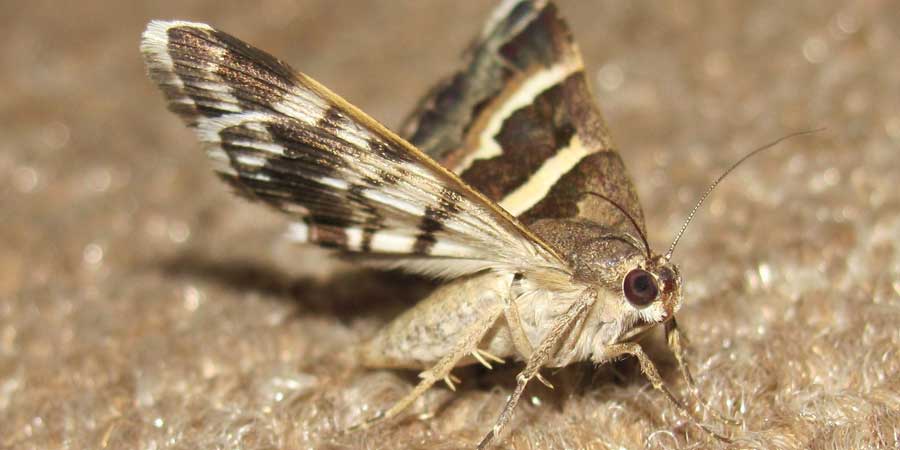
Indianmeal Moths
Identification:
The Indianmeal moth (Plodia interpunctella) is a common pantry pest that infests stored food products in homes, grocery stores, and food-processing facilities. Adults are small moths with a wingspan of about 16–20 mm; forewings are typically reddish-brown with a coppery sheen on the outer half and pale gray near the head. Larvae are creamy-white to pinkish caterpillars that produce webbing and are the stage responsible for contaminating food.
Adult Indianmeal moths are slender, nocturnal moths about 1/2 inch wide when at rest, with distinctive two-toned forewings—pale gray near the head and reddish-brown to coppery on the outer half. Larvae range from 8–13 mm when mature, are cream-colored with a dark head capsule, and often leave silken webbing and frass in infested food. Signs of infestation include live larvae in packages, irregular webbing in dry goods, clumped or discolored food, and adult moths flying near pantry areas.
Behavior:
Indianmeal moths are strongly associated with stored dry foods. Common infestation sites include cereal, flour, rice, nuts, dried fruit, pet food, birdseed, chocolate, powdered milk, and spices. Females lay eggs directly on or near food sources; newly hatched larvae feed and spin silken tunnels as they move through product, often migrating to cracks, shelf seams, and behind baseboards to pupate. Adults do not feed on stored products but are attracted to lights and may be seen flying near cupboards and pantry areas.
Larvae are the primary feeders and will consume a wide range of dry organic materials, contaminating food with webbing, frass, and cast skins. Infested products often become clumped, off‑smelling, or visibly webbed. Because larvae can feed on many pantry items, a single infestation can affect multiple product types and spread quickly if unnoticed.
Life Cycle:
The Indianmeal moth life cycle includes egg → larva → pupa → adult. Females lay dozens to hundreds of tiny, whitish eggs on or near food. Eggs hatch in a few days under warm conditions; larvae feed for several weeks to months depending on temperature and food quality, then pupate in protected sites often away from the food source. Pupation lasts from several days to weeks, and adults live about one to two weeks. In warm, indoor environments multiple generations per year are common, allowing populations to build rapidly.
What you can do:
Prevent infestations by practicing strict pantry hygiene and careful food storage. Store susceptible foods in airtight, rigid containers (glass, metal, or heavy plastic) rather than original paper or thin plastic packaging. Inspect groceries—especially bulk items, grains, and pet foods—before bringing them inside. Rotate stock using first-in, first-out (FIFO) practices, and use older items first. Clean pantry shelves regularly, vacuum cracks and corners, and discard suspicious or infested products in sealed bags. Freeze newly purchased bulk grains or dried fruit for several days to kill eggs and larvae, or heat-treat small lots per label guidance. Seal gaps around shelving and baseboards to reduce pupation sites and install tight-fitting lids on trash and compost containers.
What we do:
Pest control professionals inspect storage areas to identify infestation sources, evaluate product flow, and locate harborage and pupation sites. Control focuses on source removal and exclusion rather than broad insecticide use: technicians remove or recommend disposal of infested products, perform deep cleaning and vacuuming of storage areas, and apply targeted treatments (e.g., insecticidal dusts in voids or perimeter crack-and-crevice treatments) only when necessary and appropriate for food-handling environments. Commercial services often include monitoring with pheromone traps to detect and track adult activity, recommendations for improved storage and sanitation, and follow-up visits to verify control.
When to call us:
Contact us when infestations are widespread, recurring despite sanitation efforts, or occurring in commercial or food-handling facilities where regulatory compliance is required. Professionals can quickly identify hidden sources, implement monitoring and exclusion strategies, and provide documented corrective actions to protect inventory and public health.
Call to Action For a thorough pantry inspection, monitoring, and a customized Indianmeal moth control plan for your home or business, contact our licensed pest control team today.
For more information:
Clothes Moths
Clothing moths—most commonly the webbing clothes moth (Tineola bisselliella) and the case-bearing clothes moth (Tinea pellionella)—are small moth species whose larvae feed on natural fibers and can damage clothing, carpets, upholstery, and stored textiles. Infestations often go unnoticed until fabric damage appears because adults avoid light and larvae feed in hidden areas.
Identification:
Adult clothing moths are small, slender moths about 6–10 mm long with narrow, fringed wings. Webbing clothes moths (Tineola bisselliella) are buff-golden with a uniform coloration and no prominent markings, while case-bearing clothes moths (Tinea pellionella) are slightly darker with subtle spots and larvae that carry portable silken cases. Larvae are creamy-white to pale yellow caterpillars with dark heads and are the destructive stage that chews fibers and creates webbing or cases.
Behavior:
Clothing moths favor dark, undisturbed locations where they have access to natural fibers and animal-derived materials. Typical harborage sites include closets, drawers, chests, wardrobes, attic rafters, under furniture, beneath rugs, and storage boxes containing wool, silk, fur, feathers, leather, or soiled fabrics. Adults are weak fliers and avoid light, laying eggs directly onto or near suitable food sources. Larvae remain concealed while feeding and pupate in sheltered spots, often within fibers, seams, folds, or cracks.
Feeding Habits Larvae feed on keratin-containing materials derived from animals—wool, silk, cashmere, fur, feathers, leather, and hair—but may also damage blended fabrics and stained or soiled textiles (food, sweat, oils). The larvae create irregular holes, thinning, frayed edges, and webbing, and case-bearing species leave small portable cases attached to infested items. Damage often appears first in seldom-worn garments, folds, or storage areas.
Life Cycle:
The clothing moth life cycle includes egg → larva → pupa → adult. Females lay tiny, whitish eggs on or near food; eggs hatch in several days to weeks depending on temperature and humidity. Larval development can take weeks to many months, influenced by food quality, temperature, and humidity; in favorable indoor conditions development is often rapid. Larvae pupate in silk cocoons attached to or near the food source; adults emerge to mate and disperse, often seeking dark locations to lay eggs. Multiple generations per year are common in heated indoor environments.
What you can do:
Prevent clothing moth damage by combining sanitation, storage practices, and monitoring. Wash or dry-clean garments and bedding before long-term storage; store off-season clothing in airtight containers or garment bags (polyethylene, sealed plastic, or metal trunks). Regularly vacuum closets, under furniture, and along baseboards; launder or brush woolens and shake out rarely used items. Avoid storing soiled fabrics—sweat, food stains, or pet hair attract larvae. Use cedar and certain tightly sealed natural repellents with caution (they may deter but not reliably control infestations). Inspect secondhand clothing and storage items before bringing them indoors. Install sticky pheromone traps to monitor adult male activity (these do not kill larvae but indicate infestation presence).
What we do:
Pest control professionals conduct detailed inspections to locate infested items, pupation sites, and the extent of infestation. Control emphasizes source removal and targeted treatments: heat or cold treatments for infested textiles, thorough cleaning or disposal of heavily damaged items, localized insecticidal dusts or aerosol treatments in cracks and voids (used carefully around textiles), and professional laundering, dry-cleaning coordination, or fumigation in severe commercial cases. Technicians provide monitoring with pheromone traps, storage and sanitation recommendations, and follow-up visits to ensure eradication.
When to Call us:
Call us when you find ongoing fabric damage, see larvae or cases, detect multiple hotspots in closets or storage, or when valuable textiles (antique clothing, rugs, furs) are at risk. Professionals can accurately locate hidden infestations, recommend or provide safe treatments (including conservation-friendly options), and implement prevention plans for homes or commercial storage facilities.
For a thorough inspection, textile-safe treatment options, or a customized clothing moth prevention plan, contact our licensed pest control team today to protect your garments and household textiles.
For more information: