
Flies
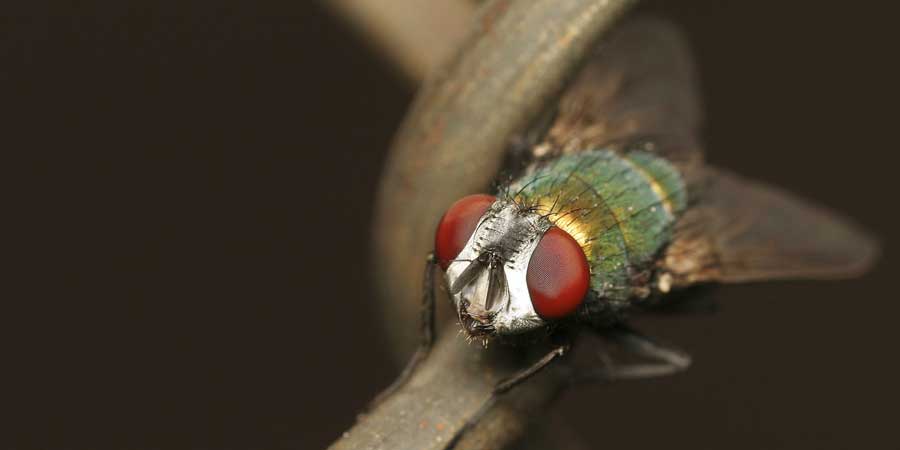
House Flies
Identification:
Adult houseflies are medium-sized, gray flies with four longitudinal stripes on the thorax, a slightly rounded abdomen, and translucent wings. Larvae are creamy white maggots lacking legs. Houseflies are distinguished from other flies by their size, thoracic pattern, and wing venation.
Behavior:
Houseflies prefer warm, moist environments near food, trash, animal manure, and decaying organic matter. Outdoors they breed in manure, compost, garbage, and decaying vegetation; indoors they are attracted to kitchens, trash areas, food-prep zones, and animal housing. Flies are diurnal, frequently rest on walls and ceilings, and travel between breeding sites and food sources.
Feeding Habits Houseflies are opportunistic feeders that consume a wide range of organic materials. Because they have sponge-like mouthparts, they liquefy solid foods with regurgitated saliva before ingestion. Common foods include human and pet food, spilled drinks, fruit, garbage, and animal wastes. Their feeding and movement can mechanically transfer bacteria, protozoa, and viruses from unsanitary sites to surfaces and food.
Mating and Life Cycle:
Female houseflies lay batches of eggs (up to several hundred over their lifespan) on moist, decaying organic matter. Eggs hatch into larvae (maggots) within a day under warm conditions; larvae feed for several days to weeks depending on temperature and substrate, then pupate in drier soil or debris. The pupal stage lasts several days to weeks, and adults emerge to mate and continue the cycle. In warm conditions, a complete generation can occur in as little as 7–10 days.
What you can do: Reduce housefly problems by eliminating breeding and feeding sources. Secure trash with tight-fitting lids and empty bins frequently, clean spills and food residues promptly, store food in sealed containers, and remove pet waste and soiled bedding. Maintain compost and manure management practices to prevent exposed breeding substrates. Install and repair window and door screens, use self-closing doors and air curtains where practical, and reduce outdoor lighting that attracts flies. Indoor sticky traps and UV traps can aid monitoring and local control.
What we do:
Pest control professionals provide inspection, source identification, and integrated control plans. Typical services include sanitation recommendations, exclusion improvements, targeted application of residual insecticides or larvicides to breeding areas, deployment of fly baits or traps, and installation or maintenance of commercial fly control devices (UV light traps, electrocuting units). In agricultural or large commercial settings, technicians may use scheduled sanitation and baiting programs, perimeter treatments, and monitoring to reduce populations.
When to call us:
Call us when fly populations are large, persistent, or linked to food-service areas, medical facilities, or livestock operations; when infestation sources are unclear; or when business operations require rapid, regulatory-compliant reduction. Professionals can identify breeding sites, implement targeted treatments, and set up ongoing prevention plans.
For a site inspection, customized housefly control plan, or commercial fly-management solutions, contact our licensed pest control team today.
For more information:
Fruit Flies
Identification:
Fruit flies (commonly Drosophila spp.) are small, fast-breeding flies often found around ripening or fermenting fruits and other organic matter. Adults are tiny—about 1/8 inch (3–4 mm) long—with tan to yellowish bodies, red or dark eyes, and translucent wings. Their small size and rapid reproduction make them a frequent nuisance in homes, restaurants, grocery stores, and food-processing facilities.
Adult fruit flies are small, typically 3–4 mm long, with rounded bodies, short antennae, and conspicuous red or dark eyes; some species may have darker eyes. Larvae are small, legless maggots that feed within fermenting material. Fruit flies are more sluggish fliers than houseflies and are often seen hovering near food, drains, or trash.
Behavior:
Fruit flies are strongly associated with fermenting or decaying organic matter and prefer warm, humid environments. Indoors they congregate around fruit bowls, produce displays, garbage and recycling bins, drains, mop sinks, compost bins, and overripe fruit or vegetables. They readily enter buildings through open doors, windows, or on incoming produce and packaging. Fruit flies are crepuscular to diurnal and often rest on surfaces near their food sources.
Adult fruit flies feed on yeasts, sugars, and fermenting liquids, while larvae feed within and on the surface of fermenting fruit, vegetables, and other organic substrates. They are attracted to vinegar and alcohol odors produced by fermentation, which is why they commonly appear near discarded fruit, fermenting beverages, drains with organic buildup, and improperly stored produce.
Mating and Life Cycle:
Female fruit flies lay eggs on or near fermenting organic matter; each female can deposit hundreds of eggs over her lifetime. Eggs hatch into larvae within a day under warm conditions; larvae feed for several days then pupate in nearby dry spots. Development from egg to adult can take as little as 7–10 days in warm temperatures, enabling multiple generations per month and rapid population growth in favorable conditions.
What you can do:
Prevent fruit fly problems by eliminating breeding and food sources. Dispose of overripe produce, store fruits and vegetables in the refrigerator or sealed containers, and clean spills and sticky residues promptly. Empty, clean, and rinse recycling and trash containers frequently and secure lids. Clean drains, mop sinks, and food-processing equipment to remove organic buildup; use drain brushes or enzymatic cleaners where needed. Inspect incoming produce, deliveries, and used containers for signs of infestation. Use screens on doors and windows and minimize unattended open food or beverage containers in dining areas. Sticky traps and baited bottle traps can help monitor and reduce adult numbers while source elimination is in progress.
What we do:
Pest control professionals perform inspections to locate breeding sources such as drains, equipment, storage areas, and overlooked organic debris. Treatments focus on source elimination and sanitation recommendations, targeted drain cleaning, and use of approved traps and monitoring devices. In commercial settings, technicians may implement scheduled sanitation and monitoring programs, corrective actions for equipment or structural issues, and staff training to prevent recurrence. Chemical treatments are generally a last resort and are used selectively in strict compliance with regulations for food-handling areas.
When to call us:
Contact us when fruit fly activity is persistent despite sanitation efforts, when infestations affect food-service or retail operations subject to health codes, or when the source cannot be located. Professionals can identify hidden breeding sites, provide targeted remediation, and set up monitoring and prevention plans to protect your business or home.
For a thorough inspection and customized fruit fly control plan, contact our licensed pest control team today to eliminate infestations and prevent reoccurrence.
For more information: