
Wasps
Red Wasps
Identification:
Polistes carolina is a common reddish-brown paper wasp found in the southeastern and mid-Atlantic United States. These medium-sized social wasps build open, umbrella-shaped paper nests in sheltered locations and play a beneficial role as predators of garden pests, but they can pose a sting risk when nests are near people, pets, or high-traffic areas.
Adult red wasps are typically 18–24 mm (about 3/4 to 1 inch) long with a slender body, narrow “waist,” and long dangling legs. Coloration is predominantly reddish-brown with yellow or darker markings on the abdomen and face; patterns vary regionally and by caste. Nests are single-comb, open, papery structures usually grayish-brown, attached by a central stalk (pedicel) to eaves, rafters, porch ceilings, tree branches, or other sheltered surfaces.
Behavior:
Red wasps prefers warm, sheltered sites for nesting, often choosing human-made structures such as eaves, porches, sheds, and garages, as well as natural sites like tree branches, shrubs, and rock overhangs. Colonies are typically annual: a solitary mated queen begins a nest in spring, rears the first workers, and the colony grows through summer. Nests are exposed (no outer envelope), built from chewed plant fibers mixed with saliva, and usually contain a modest number of cells compared with larger paper-wasp species.
Adult red wasps feed on nectar, fruit juices, and other sugary substances, while workers capture caterpillars, soft-bodied insects, and other arthropods to feed larvae. This predatory behavior makes them beneficial in gardens and agricultural settings because they help suppress pest populations. Adults are commonly seen visiting flowers for nectar.
Mating and Life Cycle
Colonies of red wasps are annual in temperate areas. After mating flights in late summer or early fall, new fertilized queens overwinter in protected sites and emerge in spring to start nests. The queen lays eggs that develop into larvae and pupae; emerging workers take over nest construction, foraging, and brood care. Late-season colonies produce new queens and males; after mating, only the new queens survive the winter. Colony size is generally smaller than in some other Polistes species, and nests are usually abandoned or die back with colder weather.
What you can do:
Reduce the chance of problematic nests by removing or limiting sheltered attachment points: seal gaps under eaves and soffits, screen vents and attic openings, and close access to unused outbuildings. Keep outdoor eating and trash areas clean, remove fallen fruit, and cover compost and garbage containers. Install yellow “wasp-friendly” lighting or reduce evening lighting in entertaining areas to lower attraction. Inspect and remove small, early-season nests in spring if safe to do so (wear protection); otherwise, contact a professional—disturbing a nest can provoke defensive stinging.
What we do:
Professionals assess nest location, colony size, and risk to people before selecting a treatment. Typical approaches include nighttime inspections with protective gear and targeted application of residual insecticidal dusts, aerosols, or foams into the nest pedicel and comb to eliminate adults and brood, followed by safe nest removal. For nests in inaccessible or high-risk areas, technicians may use extended-range formulations or recommend exclusion repairs and long-term monitoring to prevent re-nesting.
When to call us:
Call us when nests are large, located near doors, play areas, or HVAC intakes, found in hard-to-reach or fragile locations, or if anyone on the property is allergic to stings. Professionals can remove active nests safely, treat hard-to-reach sites, and advise on exclusion measures to reduce future nesting.
For safe inspection, removal, or prevention advice for red wasp nests, contact our licensed pest control team today to protect your family, guests, and property.
For more information:
Mud Daubers
Identification:
Black mud daubers are solitary wasps—commonly Chalybion and Sceliphron species—recognized by their slender bodies, metallic blue-black coloration, and habit of building mud nests. Generally non-aggressive, these wasps are beneficial predators of spiders and are frequently found on buildings, in garages, and under eaves where they construct or reuse small tubular mud nests.
Adult black mud daubers are typically 3/4 to 1 inch long with a narrow “waist,” long legs, and a shiny blue-black or black abdomen. Females build or refurbish mud nests composed of small tubes or cells, often attached to sheltered surfaces such as eaves, window frames, porch ceilings, or inside garages and sheds. Their flight is deliberate rather than erratic, and they rarely sting unless directly handled or trapped.
Behavior:
Mud daubers prefer sheltered, dry attachment sites for their mud nests, including eaves, soffits, porch ceilings, fence posts, garages, and barn overhangs. Females collect mud and form tubular cells; each cell is provisioned with paralyzed spiders and then sealed after an egg is laid. Some species reuse old mud nests or occupy preexisting cavities. Because they are solitary (each female builds and provisions her own nest), nests are usually small and localized rather than forming large colonies.
Feeding Habits Adult mud daubers feed primarily on nectar and plant sugars, while females provision nest cells with paralyzed spiders—often orb-weavers and other web-building spiders—as food for developing larvae. By preying on spiders, mud daubers provide a beneficial ecological service, though their nests near human activity can be considered a nuisance.
Mating and Life Cycle:
After a female constructs and provisions each mud cell with spiders, she lays a single egg inside and seals the cell. The egg hatches into a larva that consumes the provided prey, pupates within the mud cell, and later emerges as an adult. Development time varies with temperature and species, but many mud daubers produce one generation per year in temperate regions. Adults are most active during warm months when nesting and foraging occur.
What you can do:
Prevent mud dauber nesting by reducing suitable attachment sites and limiting access to sheltered areas. Seal cracks and gaps under eaves, soffits, and porch ceilings; screen vents, attic openings, and porch rafters; and keep garage doors closed or screened. Remove small, fresh nests in spring and summer (when empty or after ensuring no larvae are present) by knocking them down or scraping them away and then repainting or applying smooth coatings to discourage reattachment. Maintain outdoor lighting practices that reduce attraction to nectar-feeding insects, and store outdoor items away from overhangs and rafters where females might nest.
What we do:
Pest control professionals evaluate nest location, occupancy, and risk before recommending actions. Typical services include safe removal of active or abandoned nests, targeted treatments if wasps are repeatedly returning to the same site, and exclusion repairs such as sealing soffits, screening vents, and applying surface treatments to discourage nesting. For sensitive or high-traffic locations, technicians may perform removal and use minimally invasive methods to prevent recurrence.
When to call us: Contact us if nests are numerous or located in high-traffic or sensitive areas (playgrounds, entrances, food prep areas), if occupants are allergic or uncomfortable around wasps, or if repeated nesting occurs despite DIY removal. Professionals can safely remove active nests, advise on exclusion and habitat modification, and provide follow-up to prevent reestablishment.
For inspection, safe removal, or long-term exclusion strategies for black mud daubers, contact our licensed pest control team today to protect your property while preserving beneficial insect activities.
For more information:
Ground Hornets
“Ground hornets” commonly refers to ground-nesting yellowjackets (Vespula species), aggressive social wasps that build subterranean or near-ground nests. These wasps can deliver painful stings in large numbers when their nests are disturbed, making them a significant safety concern in yards, parks, and high-traffic outdoor areas.
Identification:
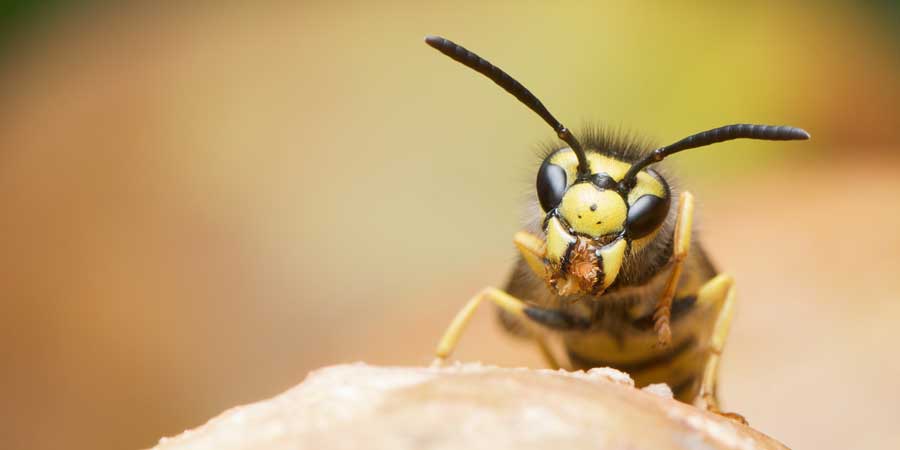
Ground-nesting yellowjackets are medium-sized wasps, typically 3/8 to 5/8 inch long, with bold black-and-yellow (or black-and-white) banding on the abdomen and a compact, robust body. Workers are winged and forage during the day; reproductives (queens and males) appear later in the season. Because several Vespula species nest in the ground, appearance varies slightly by species and region.
Behavior:
Ground hornets establish nests in preexisting cavities in soil such as rodent burrows, compost piles, voids under pavements, or shallow excavations. A single overwintered queen starts a colony in spring and builds a paper-like nursery composed of chewed wood fibers. Colonies grow through summer, often reaching thousands of workers by late summer and early fall. When nests are disturbed, workers rapidly emerge and defend aggressively, stinging repeatedly. Colonies are annual and typically die out with the first hard frosts, except for newly mated queens that overwinter.
Ground-nesting yellowjackets are omnivorous and opportunistic: workers hunt insects and spiders to feed larvae, scavenge meat and sugary foods, and visit flowers for nectar. They are frequent pests at outdoor events because they scavenge on barbecues, picnics, trash cans, and sweet drinks. Foraging workers recruit nestmates to rich food sources, increasing the likelihood of aggressive swarms around food and waste.
Mating and Life Cycle:
The life cycle begins when a lone fertilized queen emerges in spring, establishes a nest, and raises the first brood of workers. Those workers then assume nest duties while the queen continues egg laying. Colony size peaks in late summer; then the colony produces new queens and males that mate, after which only fertilized queens overwinter. Development from egg to adult depends on temperature and food availability but typically spans several weeks per generation.
What you can do:
Reduce ground hornet problems by eliminating attractive nesting sites and food sources. Keep yards free of exposed soil holes and quickly close rodent burrows or gaps beneath patios and sheds. Secure trash and compost bins with tight-fitting lids, promptly clean up food spills and outdoor eating areas, and avoid leaving meat or sugary drinks exposed. Inspect yards for early small nests (watch from a safe distance) and mark suspected nest locations to avoid accidental disturbance. When mowing or doing yard work, take care around burrows and depressions.
What we do:
Pest control professionals begin with a careful inspection to locate nests and assess risk. For active ground nests, technicians typically perform targeted treatments at dusk or night—when workers are less active—using labeled insecticidal dusts, baits, foams, or liquid formulations applied directly into the nest entrance. After treatment, technicians may remove or mark the site and advise on exclusion or habitat modification. In high-risk or public areas, professionals implement perimeter treatments, baiting programs, and follow-up visits to ensure colony elimination and to address satellite nests.
When to call us:
Contact us if a nest is in a high-traffic area, near play areas, utility equipment, or building foundations; if there are many nests on the property; if occupants are allergic to stings; or if you are uncomfortable addressing an active nest. Professionals have the protective equipment, labeled products, and experience to safely remove or treat ground hornet nests.
For safe inspection and removal of ground hornet (ground-nesting yellowjacket) nests or for prevention advice, contact our licensed pest control team today to protect your family and property.